FAAC vs LiftMaster vs Viking: Choosing the Right Gate Operator for a Northern California Estate
A side-by-side comparison of the three operator brands Heartwood Gates installs — when each is the right answer for properties in Walnut Creek, St. Helena, and Piedmont.
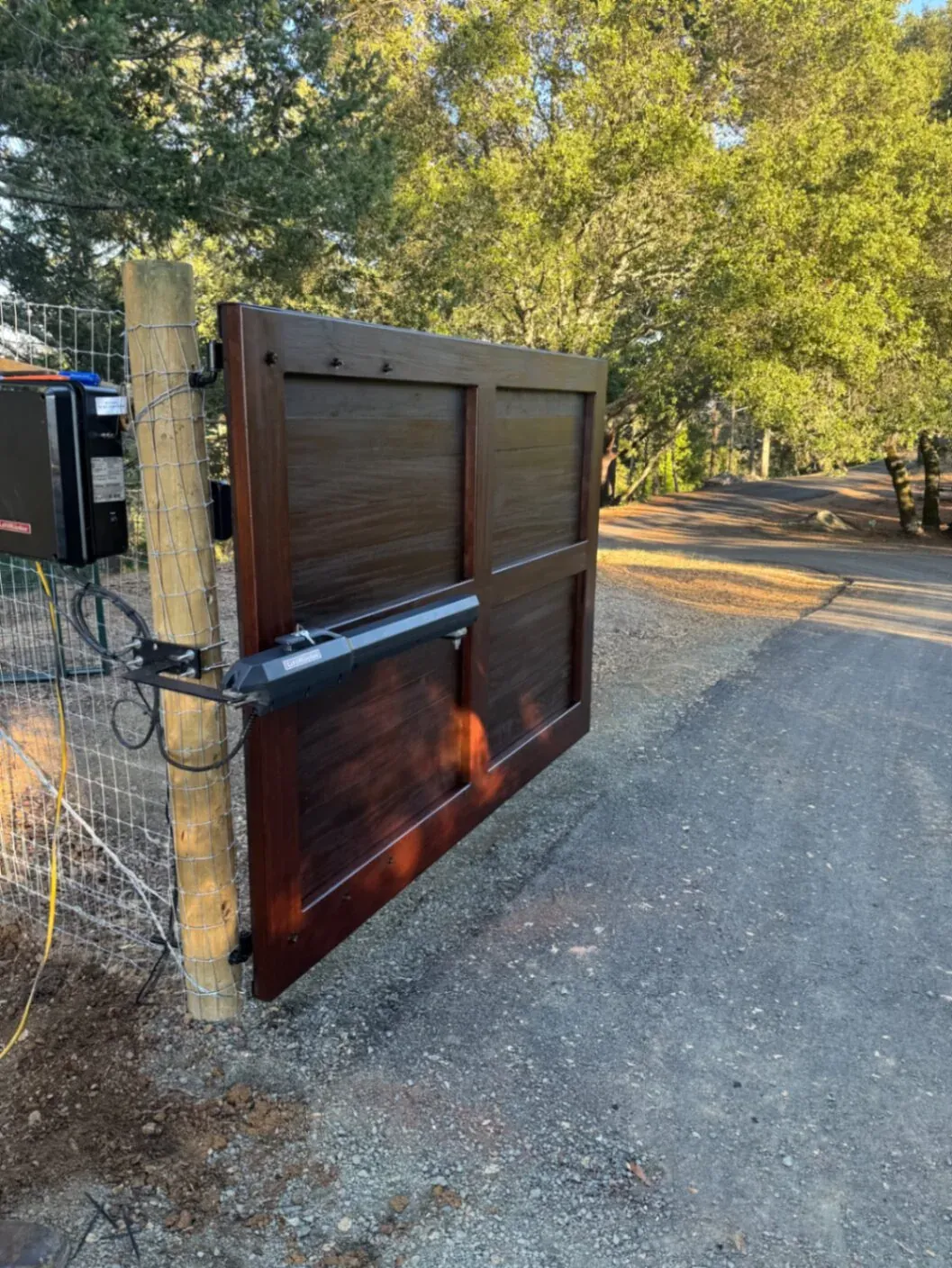
FAAC is our default for quiet hydraulic operation on inland East Bay and Wine Country estates. LiftMaster wins when myQ smart-home integration matters. Viking is the choice for high-cycle properties and gates over 18 feet per leaf. All three are industrial-grade; the wrong consumer-grade operator on a custom gate is a guaranteed two-year failure.
Key takeaways
- FAAC is our default for quiet hydraulic operation on inland East Bay and Wine Country estates. LiftMaster wins when myQ smart-home integration matters. Viking is the choice for high-cycle properties and gates over 18 feet per leaf. All three are industrial-grade; the wrong consumer-grade operator on a custom gate is a guaranteed two-year failure.
- Why operator selection matters more than clients expect: A custom hardwood gate is a long-life asset.
- FAAC — the default for quiet, premium residential: FAAC's hydraulic actuators (415L, 422, S450H) are the quietest gate operators in production.
- LiftMaster — the choice for smart-home integration: LiftMaster's myQ platform is the only smart-home gate integration we trust at the residential level.
- Viking — for high-cycle and oversize installations: Viking K-2 (swing) and I-8 (slide) are continuous-duty industrial operators.
- Can I provide my own operator? Generally no. We install operators we are factory-trained to service, and we warranty the entire gate as a system. Owner-supplied operators void the system warranty.
There are dozens of gate operator brands on the market and most of them are not appropriate for the gates we build. Three earn a permanent place in our specification: FAAC (Italian, hydraulic and electromechanical), LiftMaster (American, electromechanical with deep smart-home integration), and Viking (American, electromechanical industrial). Each is the right answer for a specific kind of installation. Choosing well saves a client thousands of dollars in service calls over the gate's lifetime.
Why operator selection matters more than clients expect
A custom hardwood gate is a long-life asset. A consumer-grade operator paired with that gate will fail within 24 to 36 months under normal cycling — we've replaced dozens of them. The operator has to match the gate's design life, not the homeowner's initial budget.
The cost difference between a consumer operator and an industrial operator is generally $800 to $2,500. The cost difference in service calls over ten years is significantly more. We will not install a gate with a consumer-grade operator, regardless of client preference.
FAAC — the default for quiet, premium residential
FAAC's hydraulic actuators (415L, 422, S450H) are the quietest gate operators in production. There is no gear-train clatter and no motor whine — just smooth, deliberate motion. For estates in Alamo, Danville, Lafayette, Walnut Creek, St. Helena, and Yountville where the gate is within earshot of the main house, this matters every single morning.
FAAC's hydraulic systems also tolerate the 100°F-plus summer temperatures common in inland Contra Costa and Napa County without the thermal fade that affects electromechanical operators. The trade is service complexity — when a hydraulic FAAC needs repair, it needs a tech who knows hydraulic systems. We carry parts and service all installations we've made.
Our default FAAC pairings: 415L for residential swing gates up to 14 feet per leaf, 422 for heavier residential up to 18 feet, S450H for commercial and oversize estate gates, 746 and 844 for cantilever sliding installations.
LiftMaster — the choice for smart-home integration
LiftMaster's myQ platform is the only smart-home gate integration we trust at the residential level. It interoperates with Apple HomeKit, Google Home, Amazon Alexa, Tesla Powerwall, and most major access-control systems. For Piedmont, Berkeley Hills, and tech-corridor clients who want gate status and control from their phone — and who want their cleaner, dog walker, and contractor to have time-limited access codes that audit cleanly — LiftMaster is the answer.
Mechanically, LiftMaster's LA400, LA500, and CSL24 are all-electric and quieter than industrial competitors but not as quiet as FAAC hydraulic. The trade is the smart-home depth. We default to LiftMaster on every installation where the client mentions phone control or access logging in the design conversation.
Wiegand-compatible access controllers and PoE keypads round out the LiftMaster ecosystem. We typically pair with HID Signo readers for clients who want commercial-grade credentialing on a residential gate.
Viking — for high-cycle and oversize installations
Viking K-2 (swing) and I-8 (slide) are continuous-duty industrial operators. They are not the quietest options, and they don't have smart-home depth, but they will run 50,000 cycles a year for a decade without complaint. For estates with caretakers, vineyards with daily vendor traffic, and any property where the gate cycles more than 40 times a day, Viking is the durable answer.
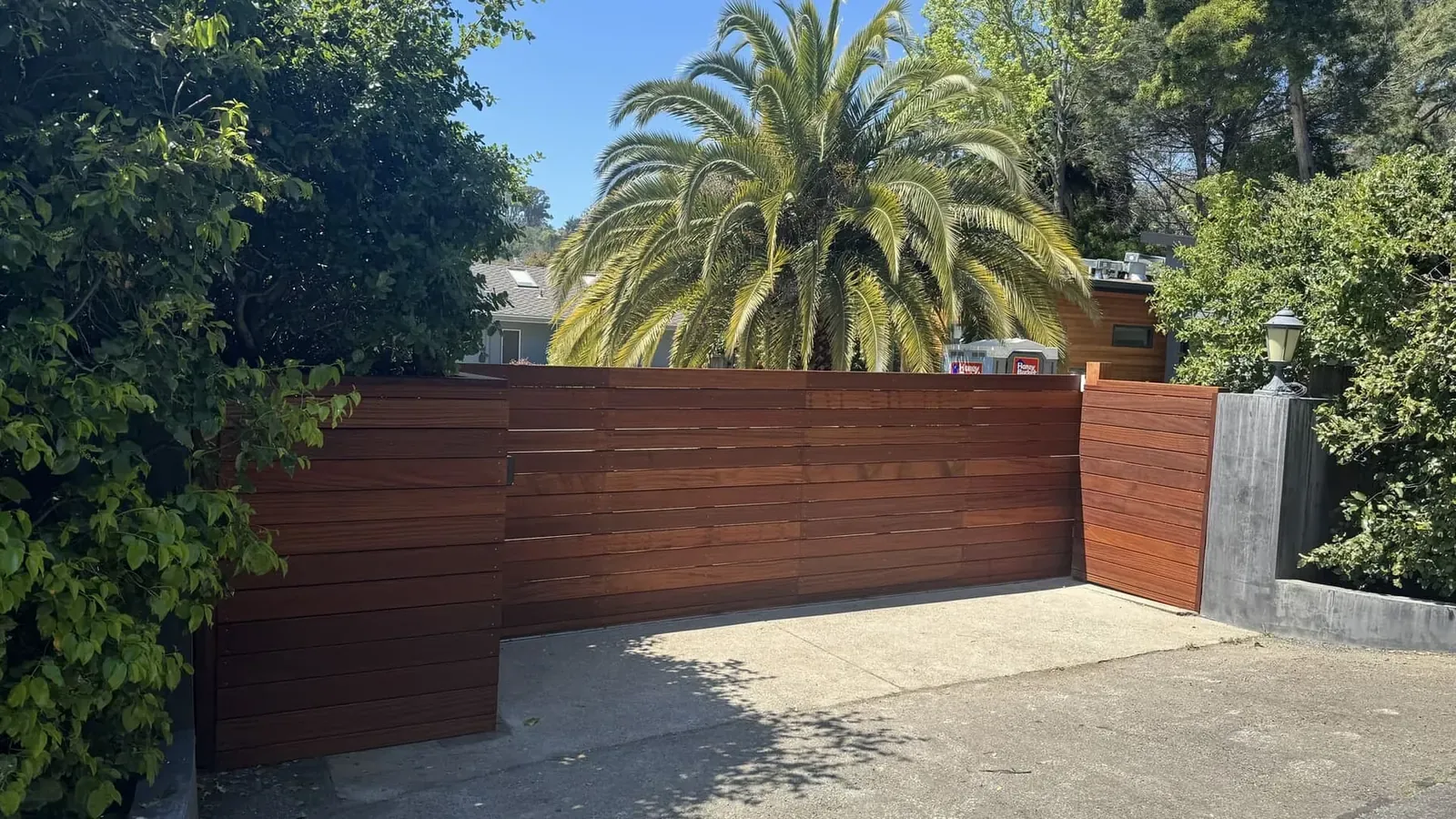
Viking is also our default for gates with a total leaf weight above 600 pounds — typically the wide hybrid driveway gates described in our steel sub-frame piece. Below 600 pounds, FAAC or LiftMaster will handle the load; above 600 pounds, the duty rating of the Viking pays back over time.
We're booking design consultations 4–6 weeks out. Send us your driveway photos and we'll come back with a sketch, wood spec, and finish system within five business days.
What we will not install
We will not install Mighty Mule, GTO, US Automatic, or any other consumer-grade chain-drive operator on a custom hardwood gate. The chain mechanisms are not built for the cyclic loads a substantial gate generates, and the control boards lack the safety features required under current UL325 standards.
We will also not install operators salvaged from prior installations unless we have full service history and a current load test. The cost of a failed operator on a 600-pound gate is far higher than the cost of fresh hardware.
How we choose for a specific client
Three questions decide it: How close is the gate to the main house (proximity favors FAAC). How important is phone-based access control (smart-home favors LiftMaster). How heavy is the gate and how often will it cycle (heavy/high-cycle favors Viking). Most projects answer cleanly to one of the three brands; a few projects pair FAAC actuators with a LiftMaster controller for the best of both worlds.
Talk through the choice with us at the design stage, not after the gate is built. The operator drives the load path, post sizing, and electrical service planning, and changing operator brands late in the build means re-engineering work.
About hardware
For more answers, see our full FAQ.
Related articles
UL325 Gate Safety Requirements: What Every Homeowner Should Know Before Building an Automatic Gate
The Steel Sub-Frame and Sapele Cladding Method for Wide Driveway Gates
Why We Specify Hand-Forged Iron Hardware for Estate Gates in St. Helena and Yountville
Let's design a gate that belongs to your home.
Tell us about the entrance you want to build. We respond same-day to consultations booked before 2pm, next business day after.