
UL325 Gate Safety Requirements: What Every Homeowner Should Know Before Building an Automatic Gate
A plain-language walkthrough of UL325 — the safety standard that governs every automatic gate installation in the United States — and what compliance looks like on a Heartwood Gates project in Napa, Sonoma, or the East Bay.
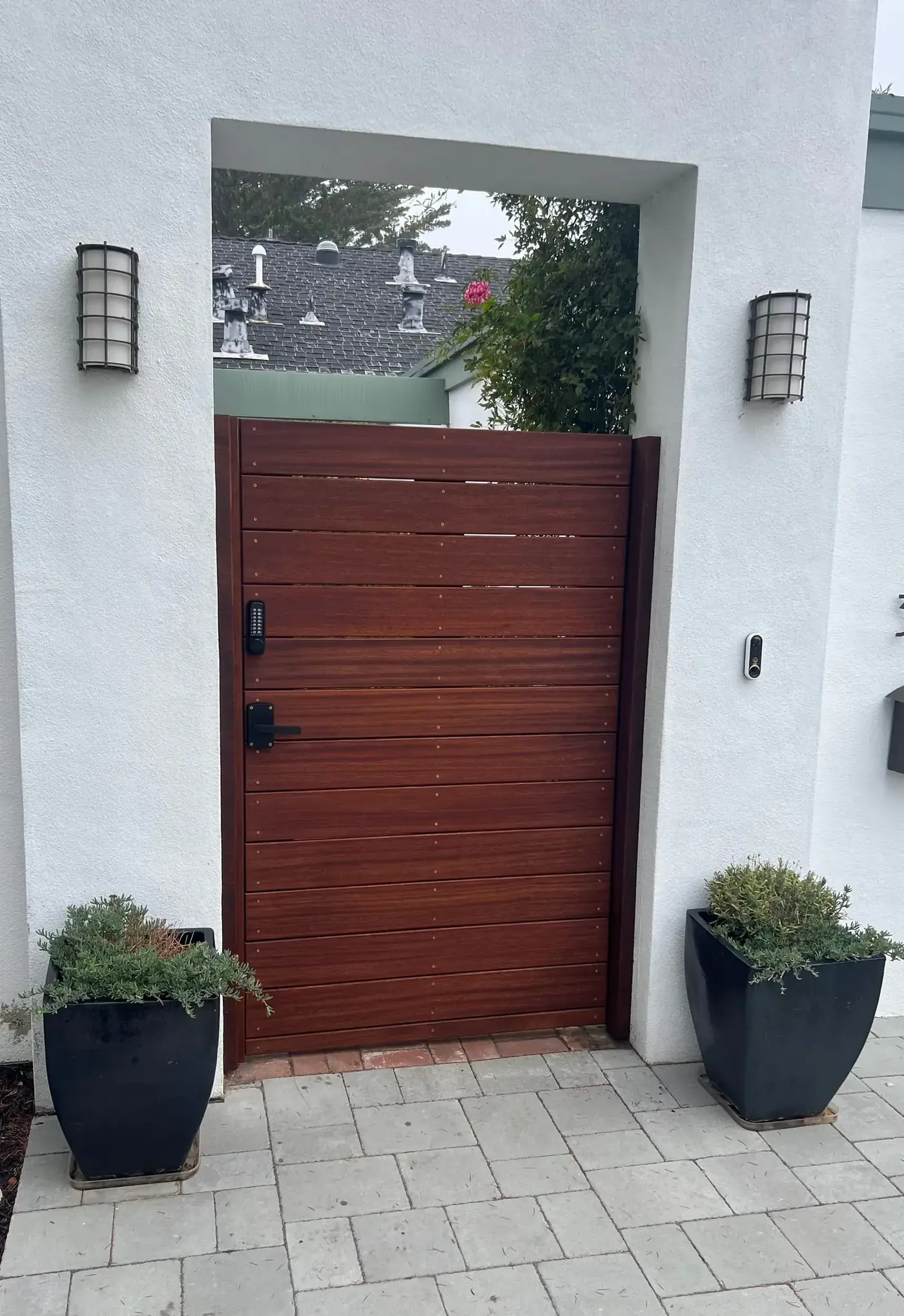
UL325 requires that every automatic gate have at least two independent entrapment-protection devices (photo eyes, safety edges, or inherent reversing systems), proper warning signage, and a control system that fails safe. Heartwood Gates installs to the full standard on every automatic gate we build across Napa, Sonoma, Marin, and the East Bay.
Key takeaways
- UL325 requires that every automatic gate have at least two independent entrapment-protection devices (photo eyes, safety edges, or inherent reversing systems), proper warning signage, and a control system that fails safe. Heartwood Gates installs to the full standard on every automatic gate we build across Napa, Sonoma, Marin, and the East Bay.
- What UL325 is and why it exists: UL325 was strengthened significantly in 2000 after a series of fatal child entrapment incidents involving automatic gates without proper safety reversing systems.
- The two-device rule: Every automatic gate must have at least two independent entrapment-protection devices.
- Required signage and labeling: UL325 requires warning placards on both sides of the gate, visible from both the inside and outside of the property.
- Fail-safe control logic: The gate control system must fail safe — meaning that if a safety device is disconnected, damaged, or in a fault state, the gate must not operate automatically.
- Does UL325 apply to manual gates? No. UL325 applies only to powered gates. A manually operated gate is governed by general building code and good practice, not UL325.
UL325 is the safety standard published by Underwriters Laboratories that governs every automatic vehicular gate installation in the United States. It is not optional, it is not regional, and it has been the law since 2000. Most homeowners have never heard of it. Many gate installers — particularly the ones underbidding custom shops — quietly skip parts of it. Here is what compliance actually looks like, and why we will not install a gate that doesn't meet the full standard.
What UL325 is and why it exists
UL325 was strengthened significantly in 2000 after a series of fatal child entrapment incidents involving automatic gates without proper safety reversing systems. The current standard requires multiple, independent layers of entrapment protection — the principle being that a single safety device can fail without warning, and a second device must catch the failure before someone gets hurt.
The standard applies to every powered vehicular gate, residential and commercial, regardless of size or cycle frequency. There is no exemption for private driveways or remote properties.
The two-device rule
Every automatic gate must have at least two independent entrapment-protection devices. The acceptable devices fall into three classes: inherent (built into the operator — current monitoring that reverses the gate when it senses resistance), Type B1 (non-contact, typically photo-eye beams), and Type B2 (contact, typically safety edge sensors along the leading edges).
On every gate we install, we provide all three. The operator's inherent reversing system handles the first layer. Photo-eye beams across the gate opening at vehicle height handle the second. Safety edges along the leading edge of the gate handle the third. Triple-redundancy is not required by UL325, but it is our standard because the marginal cost is trivial compared to the marginal risk reduction.
Required signage and labeling
UL325 requires warning placards on both sides of the gate, visible from both the inside and outside of the property. The placards must include the standard UL325 entrapment warning text and graphics. We supply and install these on every project — they are not optional, and they should not be removed by the homeowner for aesthetic reasons.
Operator labels must remain legible for the operator's service life. The control board must be accessible for inspection and reset.
Fail-safe control logic
The gate control system must fail safe — meaning that if a safety device is disconnected, damaged, or in a fault state, the gate must not operate automatically. This is why we will not bypass a photo eye to 'temporarily get the gate working' for a homeowner. If a safety device is faulted, the gate is offline until the device is repaired. Period.
Every installation we make includes a documented commissioning test — we cycle the gate, intentionally trigger each safety device, and verify the gate responds correctly. The test results are part of the project file we leave with the homeowner.
We're booking design consultations 4–6 weeks out. Send us your driveway photos and we'll come back with a sketch, wood spec, and finish system within five business days.
What non-compliant installations look like
We have been called in to service automatic gates across the East Bay, Napa, and Sonoma that have a single safety device, no warning signage, no safety edges, or photo eyes mounted at the wrong height. Some were installed by general contractors with no gate-specific training. Some were installed by gate companies that simply chose not to follow the standard.
In each case, we will not service the gate without first bringing it into UL325 compliance. The liability exposure to the homeowner of an out-of-compliance gate — particularly if a child or pet is injured — is enormous and is generally not covered by homeowner's insurance.
Compliance on Heartwood Gates installations
Every automatic gate we build in Napa, Sonoma, Marin, Contra Costa, Alameda, and the Sacramento area is installed to the full current UL325 standard, commissioning-tested before sign-off, and documented in the project file. We carry the photo eyes, edges, and signage as standard inventory; the cost is included in our installation pricing.
If you are evaluating bids from multiple gate companies and one bid is significantly lower than the others, ask whether the UL325 safety package is included or treated as an add-on. The difference is often the entire reason for the bid spread.
About hardware
For more answers, see our full FAQ.
Related articles
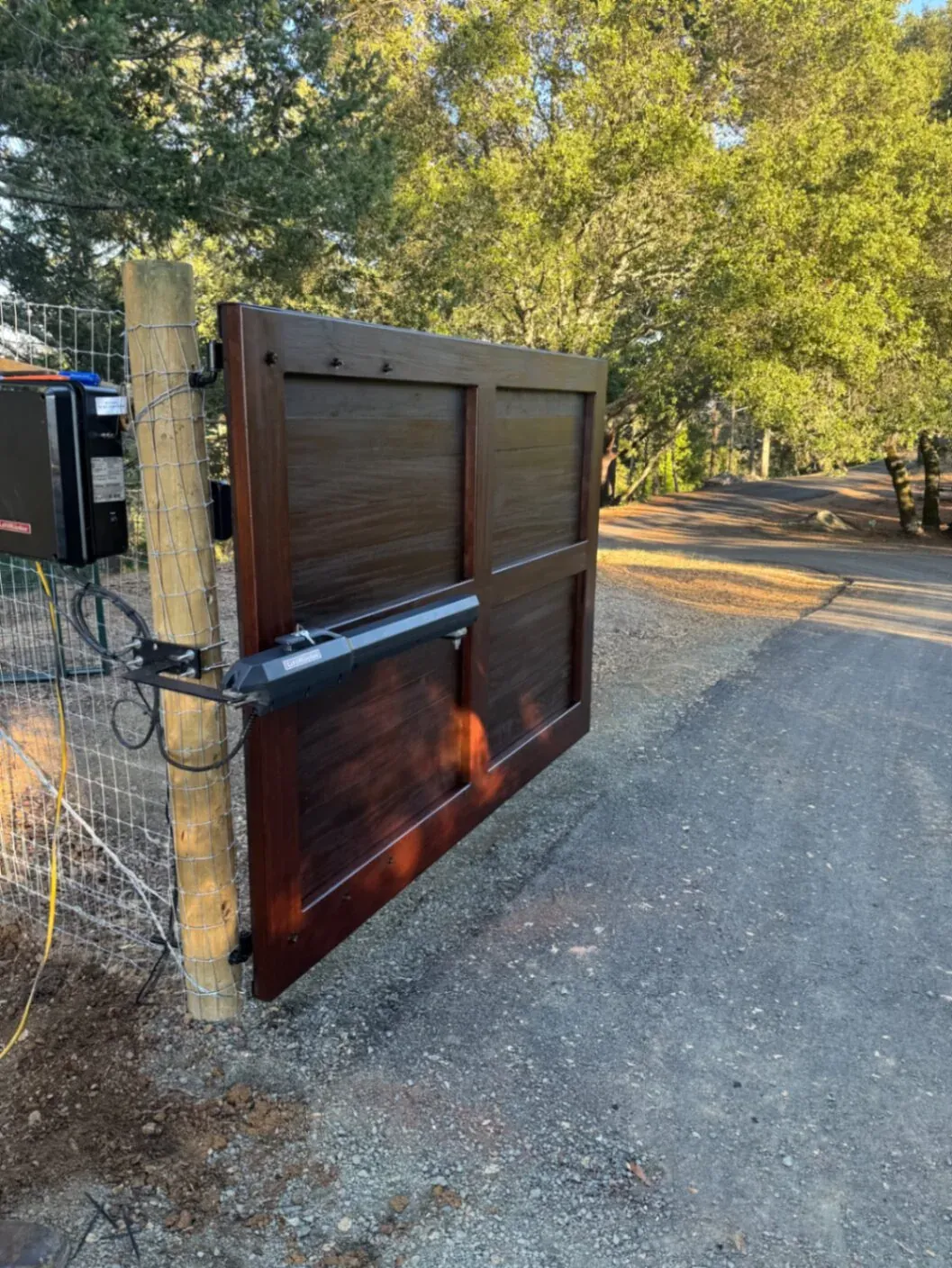
FAAC vs LiftMaster vs Viking: Choosing the Right Gate Operator for a Northern California Estate
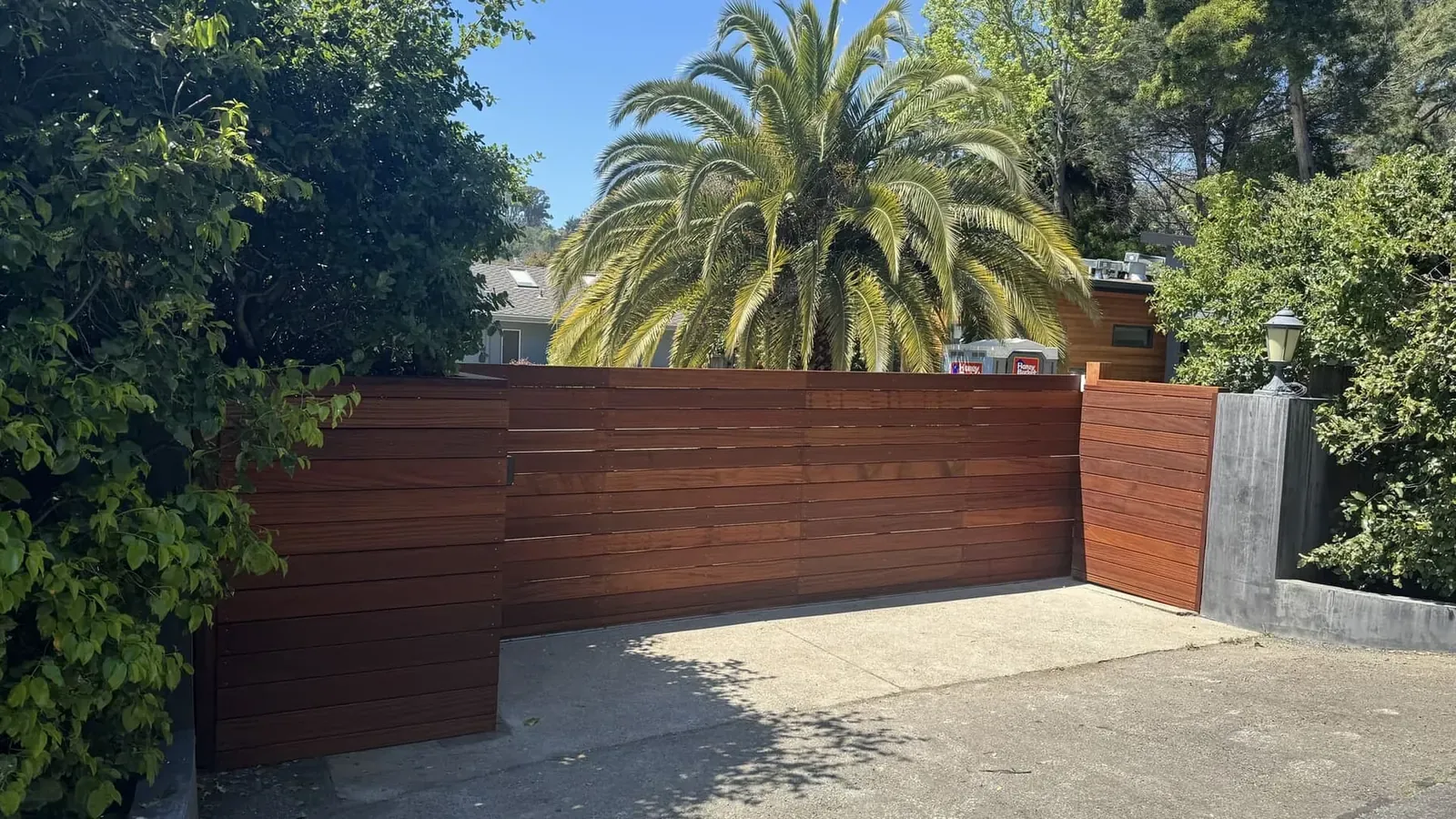
The Steel Sub-Frame and Sapele Cladding Method for Wide Driveway Gates
Cantilever Sliding Gate Engineering for Hillside Driveways in Lafayette and Orinda
Let's design a gate that belongs to your home.
Tell us about the entrance you want to build. We respond same-day to consultations booked before 2pm, next business day after.