Why We Specify Hand-Forged Iron Hardware for Estate Gates in St. Helena and Yountville
The difference between cast-iron reproduction hardware and true hand-forged hardware — and why every high-end gate we build in the Napa Valley uses a forged hinge, strap, and pull.
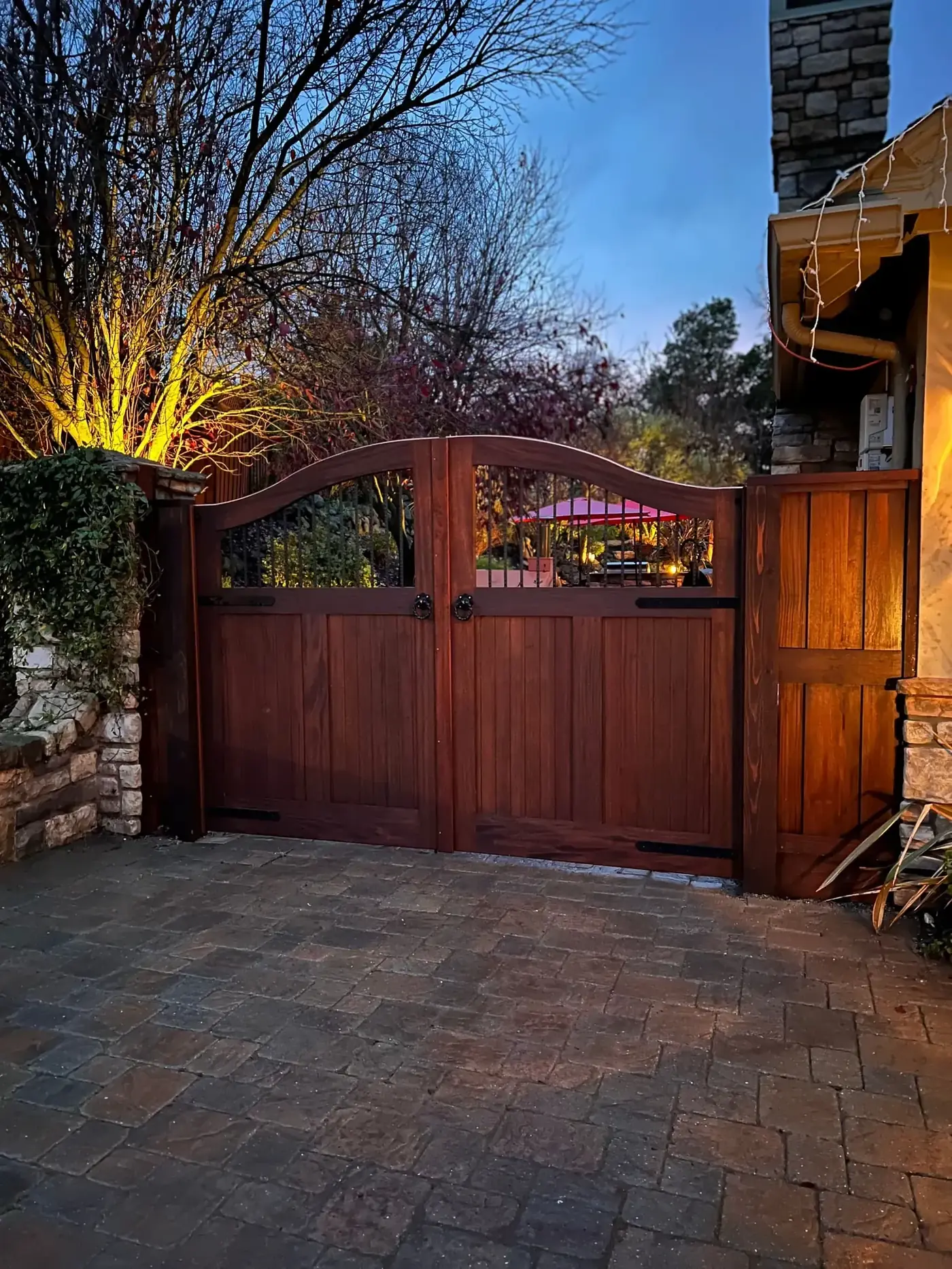
Cast-iron reproduction hardware is fine for production gates. For estate-grade work in the Napa Valley, Heartwood Gates partners with a small number of Northern California blacksmiths to forge custom hinges, straps, and pulls sized to the specific gate. The cost premium is meaningful; the visual and tactile result is uniquely irreplaceable.
Key takeaways
- Cast-iron reproduction hardware is fine for production gates. For estate-grade work in the Napa Valley, Heartwood Gates partners with a small number of Northern California blacksmiths to forge custom hinges, straps, and pulls sized to the specific gate. The cost premium is meaningful; the visual and tactile result is uniquely irreplaceable.
- Cast versus forged — what actually differs: Cast iron is poured molten into a mold.
- The smiths we work with: We partner with a small group of working Northern California blacksmiths for custom forging — typically two or three shops at any given time, all within a half-day drive of our Concord workshop.
- Functional hardware versus decorative hardware: Not every piece on a gate has to be forged.
- Finishing forged hardware for outdoor use: Bare forged steel will rust quickly in outdoor exposure.
- How much does forged hardware add to a gate's cost? Typically 8 to 18 percent of the total gate price, depending on the number of pieces and complexity. For estate projects this is well within the design budget; for production gates it usually is not.
There is a visible, tactile difference between a cast-iron reproduction hinge bolted to a gate and a hand-forged iron hinge made for that gate. The cast piece is dimensionally perfect, repeats infinitely, and looks like a catalog item. The forged piece carries the hammer marks of the smith who made it, varies slightly across a matched set, and reads as a one-of-one object. On the estate gates we build for clients in St. Helena, Yountville, Calistoga, and the upper Napa Valley, the difference matters — and we specify forged hardware as the default.
Cast versus forged — what actually differs
Cast iron is poured molten into a mold. The result is a part with a uniform surface texture, sharp mold-parting lines, and a slightly grainy finish characteristic of sand casting. Cast iron is also brittle — it will crack rather than bend under sudden load. For decorative purposes on a small hinge or pull, cast is perfectly adequate. For structural purposes on a large estate gate, it is the wrong material.
Forged iron (more accurately, forged low-carbon steel) is heated and worked under a hammer. The grain structure of the metal aligns along the worked direction, which makes a forged hinge significantly stronger than a cast equivalent of the same weight. The surface texture varies along the part — the smith's hammer marks remain visible — and no two pieces in a matched set are identical.
On gates that weigh 300 to 600 pounds and cycle thousands of times a year, the structural argument for forged hardware is real. The aesthetic argument — that the piece reads as handmade because it is — is the reason we specify it on estate work.
The smiths we work with
We partner with a small group of working Northern California blacksmiths for custom forging — typically two or three shops at any given time, all within a half-day drive of our Concord workshop. Each shop has a distinctive style of mark-making, and we match the shop to the project. A traditional Napa Valley villa gate goes to one smith; a contemporary modern barn-door style gate goes to another.
Every hinge, strap, and pull is made for the specific gate it will live on. We send the smith dimensioned drawings, photos of the wood selection, and in many cases a sample of the actual Sapele or white oak the hardware will mount to. The smith returns a set of finished pieces in 4 to 8 weeks.
Functional hardware versus decorative hardware
Not every piece on a gate has to be forged. We commonly specify industrial ball-bearing hinges (concealed behind decorative forged straps) as the structural element, with the forged strap hinge acting as the visible aesthetic piece. This combination gives the gate the mechanical reliability of industrial hardware and the visual character of forged work.
Pulls, latch bars, and decorative bosses are pure forged work — they don't carry operational load, but they are the pieces a visitor touches and looks at closely. Specifying them in forged iron versus catalog hardware is the single highest-impact upgrade available on a custom gate.
We're booking design consultations 4–6 weeks out. Send us your driveway photos and we'll come back with a sketch, wood spec, and finish system within five business days.
Finishing forged hardware for outdoor use
Bare forged steel will rust quickly in outdoor exposure. We specify a hot-wax finish (a traditional blacksmith's finish — beeswax and linseed oil applied to the hot metal) for clients who want the natural dark gray-to-black aged-iron look, and a low-gloss epoxy primer with oil-rubbed bronze topcoat for clients who want a more durable, lower-maintenance finish.
Both finishes require periodic refresh — the wax finish annually, the epoxy/bronze finish every 5 to 7 years. We include the schedule in the gate's maintenance documentation.
When forged hardware is not the right answer
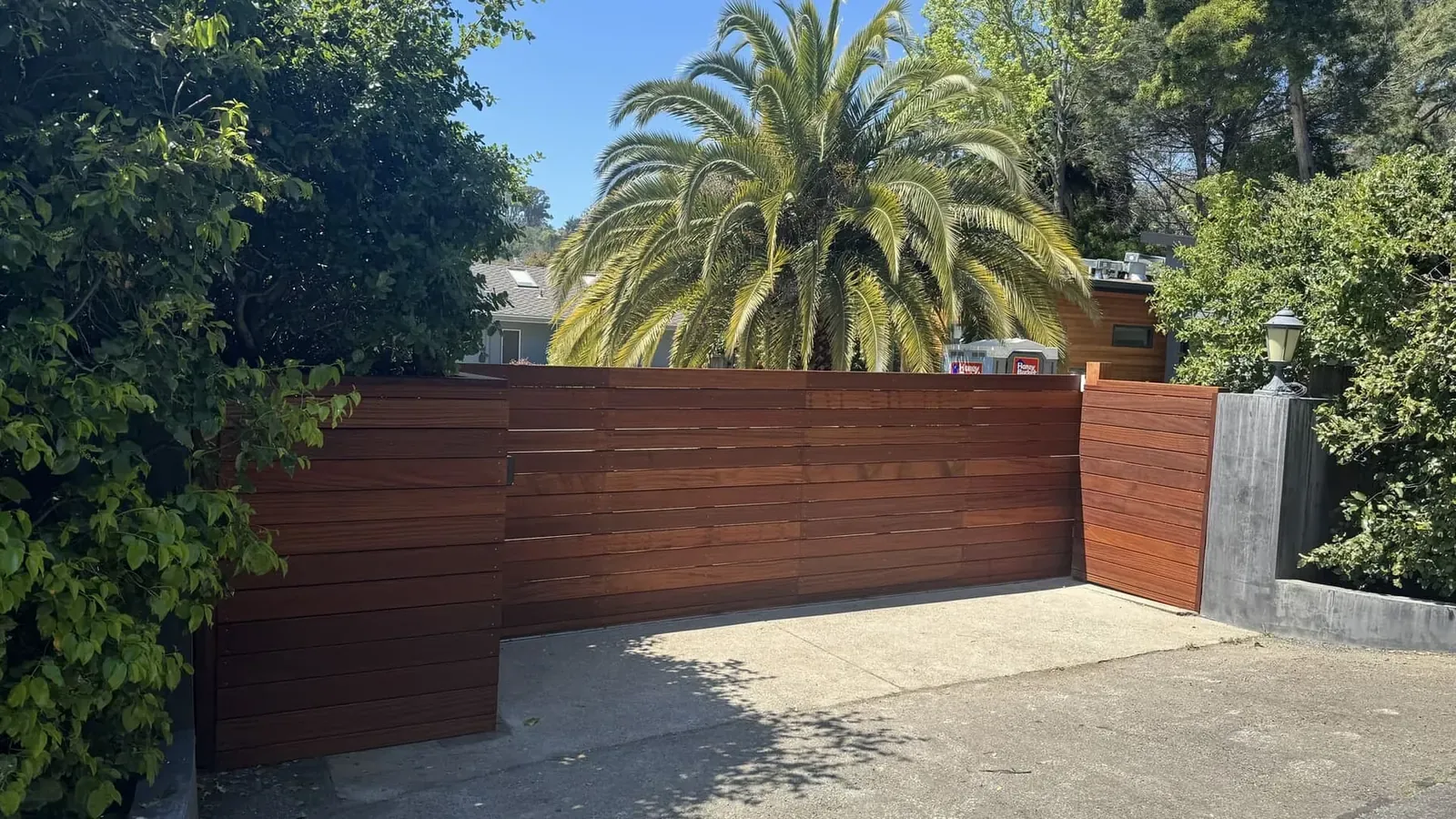
For modern contemporary gates with clean horizontal lines, forged hardware can read as visually inconsistent with the design language. On those projects we typically specify concealed industrial hinges with no visible decorative hardware, sometimes with brushed stainless or blackened steel pulls as the only visible metal.
Forged hardware also adds 6 to 10 weeks to the project schedule for the smith's lead time. On projects with tight closing deadlines, we discuss the trade-off honestly and sometimes proceed with high-quality cast or stamped hardware as a deliberate choice.
About hardware
For more answers, see our full FAQ.
Related articles
Let's design a gate that belongs to your home.
Tell us about the entrance you want to build. We respond same-day to consultations booked before 2pm, next business day after.