
Why We Mill Our Own Hardwood Dominoes (and How They Outperform Festool's)
Festool's Domino system revolutionized loose-tenon joinery. Here's why we still cut our own dominoes from kiln-dried Sapele and white oak for every gate that leaves our Concord workshop.
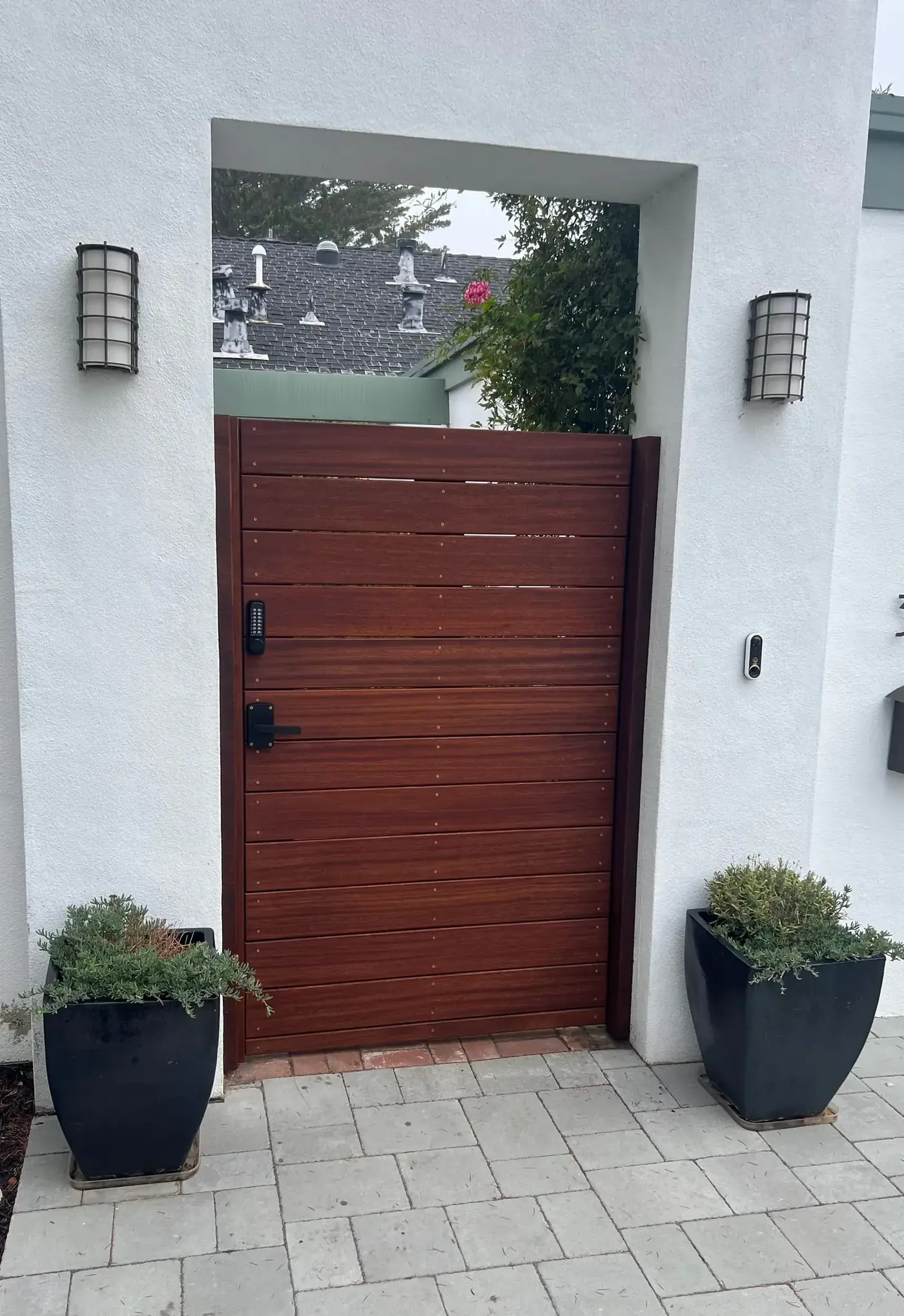
Festool dominoes are made from European beech — excellent for indoor furniture, but a poor choice for outdoor gates because beech swells, splits, and rots in wet conditions. We mill our own dominoes from the same hardwood as the gate itself, producing a joint that moves in sync with the surrounding wood and resists weather for the life of the gate.
Key takeaways
- Festool dominoes are made from European beech — excellent for indoor furniture, but a poor choice for outdoor gates because beech swells, splits, and rots in wet conditions. We mill our own dominoes from the same hardwood as the gate itself, producing a joint that moves in sync with the surrounding wood and resists weather for the life of the gate.
- What the Festool Domino system actually is: The Domino joiner uses an oscillating router bit to cut a precise oval mortise into a piece of wood.
- Why beech is wrong for outdoor gates: European beech has a Janka hardness of about 1,300 and beautiful grain, but it has almost no natural decay resistance.
- What our shop-milled dominoes are made of: Every gate we build gets dominoes milled from the same wood as the surrounding stiles and rails.
- Why we still own the Festool joiner: We use the Festool Domino joiner to cut the mortise — just not to supply the tenon.
- Are your hardwood dominoes compatible with the Festool Domino joiner? Yes. We mill our dominoes to match Festool's 8mm, 10mm, and 14mm dimensions to within ±0.05mm. They fit Festool mortises with the same friction fit as factory beech dominoes.
Festool's Domino joiner is one of the most impressive woodworking tools made in the last quarter-century. It cuts a precise floating mortise in seconds, and the matching beech dominoes Festool sells are dimensionally perfect. We own three of them. We use them every week. And we still mill almost every domino that goes into a Heartwood gate from our own stock of kiln-dried Sapele, white oak, and ipe — because for an outdoor gate that will spend the next thirty years in Orinda sun or Tiburon salt air, beech is the wrong wood.
What the Festool Domino system actually is
The Domino joiner uses an oscillating router bit to cut a precise oval mortise into a piece of wood. A matching factory-made domino — a beech tenon with an oval cross-section — is then glued into the mortise. The geometry is brilliant: the oval shape resists rotation, the precision of the cut means a tight friction fit, and the speed of the tool is unmatched.
For indoor furniture, casework, and cabinets, the Domino system is excellent. The beech dominoes Festool supplies are kiln-dried, dimensionally stable, and the right size for the joints they're meant to hold. Inside a temperature-controlled house, they last forever.
Outdoor gates are a different problem. The wood is exposed to direct rain, ultraviolet, and humidity swings of 80 percentage points between summer afternoons and winter mornings. In those conditions, beech is one of the worst woods you can put inside a joint.
Why beech is wrong for outdoor gates
European beech has a Janka hardness of about 1,300 and beautiful grain, but it has almost no natural decay resistance. The USDA Forest Products Laboratory rates beech as nonresistant to rot. Once moisture penetrates the joint — and it always does, eventually — the beech domino is the first thing to fail.
Beech also moves more than most outdoor-rated woods as humidity changes. The dimensional change is small, but inside a tight joint it's enough to crack the surrounding hardwood as the domino swells, or to open up a gap as the domino shrinks. Over a few seasons in Orinda's microclimate, that translates to visible joint failure.
When a Festool beech domino is used in an outdoor joint, the failure mode is predictable: the domino absorbs moisture, swells, splits the surrounding wood, then dries out, shrinks, and leaves a loose joint. We've torn apart gates built this way and replaced the dominoes with our own.
What our shop-milled dominoes are made of
Every gate we build gets dominoes milled from the same wood as the surrounding stiles and rails. A Sapele gate gets Sapele dominoes. A white oak gate gets quarter-sawn white oak dominoes. An ipe gate gets ipe dominoes. The principle is simple: the joint material should move in sync with the surrounding wood, so seasonal humidity changes affect both at the same rate.
Sapele, white oak, and ipe are all rated by the USDA as resistant or very resistant to decay. They contain natural extractives — tannins in white oak, tropical oils in Sapele and ipe — that resist water absorption and fungal attack. A Sapele domino inside a Sapele gate stile will see decades of weather without breaking down.
We mill our dominoes on a dedicated jig from offcuts of the same boards used for the gate. Nothing is wasted, and every domino has known provenance.
Why we still own the Festool joiner
We use the Festool Domino joiner to cut the mortise — just not to supply the tenon. The tool itself is exactly the right way to cut a precise oval mortise quickly and repeatably, and we'd be slower without it.
The substitution is in the consumable. Where Festool ships beech dominoes in plastic bags, we ship our own hardwood dominoes from a labeled bin in the corner of the shop. The mortise cut is the same. The mechanical fit is the same. The joint that comes out the other side is dramatically different.
For our indoor furniture work — including the Sapele dining tables we build alongside gates — we'll often use the factory beech dominoes. Indoors, beech is fine. Outdoors, it's not.
Dimensional accuracy: matching Festool's tolerances
The reason most shops use factory Festool dominoes is that they're dimensionally perfect. Cutting your own tenons that match Festool's mortise dimensions to within a few thousandths of an inch is harder than it sounds, and getting it wrong means the joint is loose.
Our jig produces dominoes in the three Festool sizes we use most — 8mm, 10mm, and 14mm — to within ±0.05mm of the factory dimensions. We measure every batch with calipers. The tongue slides into a Festool mortise with the same friction fit as a factory beech domino.
This dimensional consistency is why we can use our shop-milled dominoes with the Festool tool without compromise — the tool doesn't know the difference, and neither do the joints.
We're booking design consultations 4–6 weeks out. Send us your driveway photos and we'll come back with a sketch, wood spec, and finish system within five business days.
When loose tenons are the right choice over a true mortise and tenon
A floating, loose-tenon joint like the Festool Domino system is not always the right choice. For the primary frame of a gate — the corners where the long stiles meet the long rails — we always use a traditional, integrated mortise and tenon (covered in our companion piece on mortise and tenon joinery).
Loose tenons shine for secondary joinery: panel divider rails, mid-rails on tall gates, intermediate stiles, and the joinery inside the cladding of a hybrid steel-and-wood gate. In those locations, the speed and precision of the Domino approach is unmatched, and the load is well within what a 14mm hardwood domino can handle indefinitely.
Knowing which joint to use where is the part of the craft that doesn't fit on a spec sheet. It's the reason we still hand-decide every joint in every gate before any chip falls.
What this means for a client in Orinda or the broader East Bay
If you're commissioning a gate from anyone in the East Bay, ask what's inside the joints. If the answer is "factory dominoes" without further specification, you're likely getting beech tenons inside whatever expensive hardwood you paid for outside. In a decade, that hidden mismatch will show.
A Heartwood gate uses the same wood inside the joint as outside it — start to finish. The joint is invisible, but it's the part of the gate that determines whether you'll be calling someone for repairs in year eight.
If you'd like to see our dominoes alongside Festool's at the workshop, we welcome shop visits by appointment. Get in touch through our contact page, or read about our custom gate process.
Service area and how to get a quote
We serve Orinda, Lafayette, Moraga, Walnut Creek, Alamo, Danville, and the entire East Bay corridor from our Concord workshop. Most consultations in Orinda happen within ten days of first contact. See our East Bay service area for project lead times.
A typical custom Sapele entry gate with hand-milled dominoes ranges from $7,500 to $14,500 depending on size and hardware. Automated driveway gates start higher; see our pricing guide for ranges.
Every project starts with a free design consultation. We'll review your site, talk through materials and joinery, and follow up with a fixed-price proposal.
About joinery
For more answers, see our full FAQ.
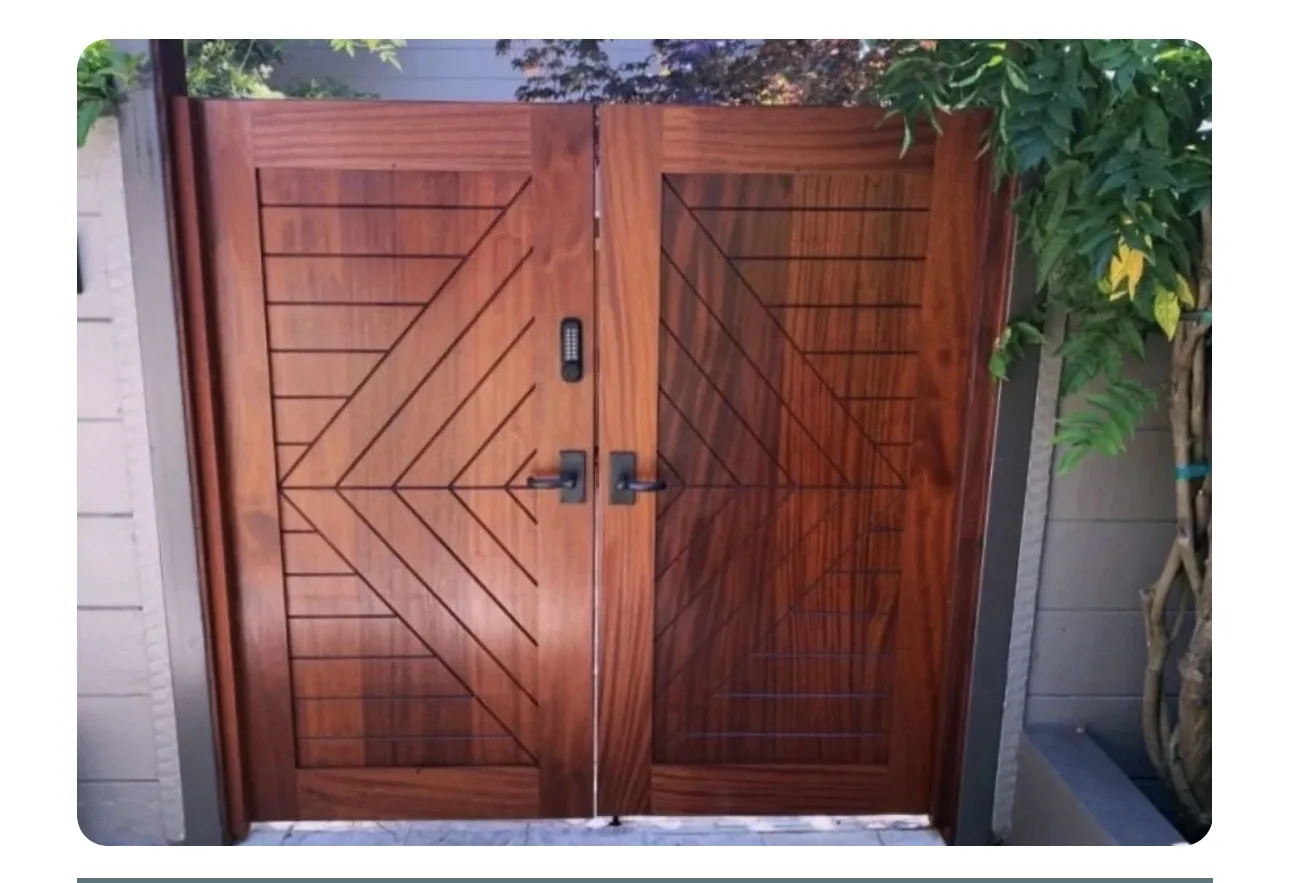
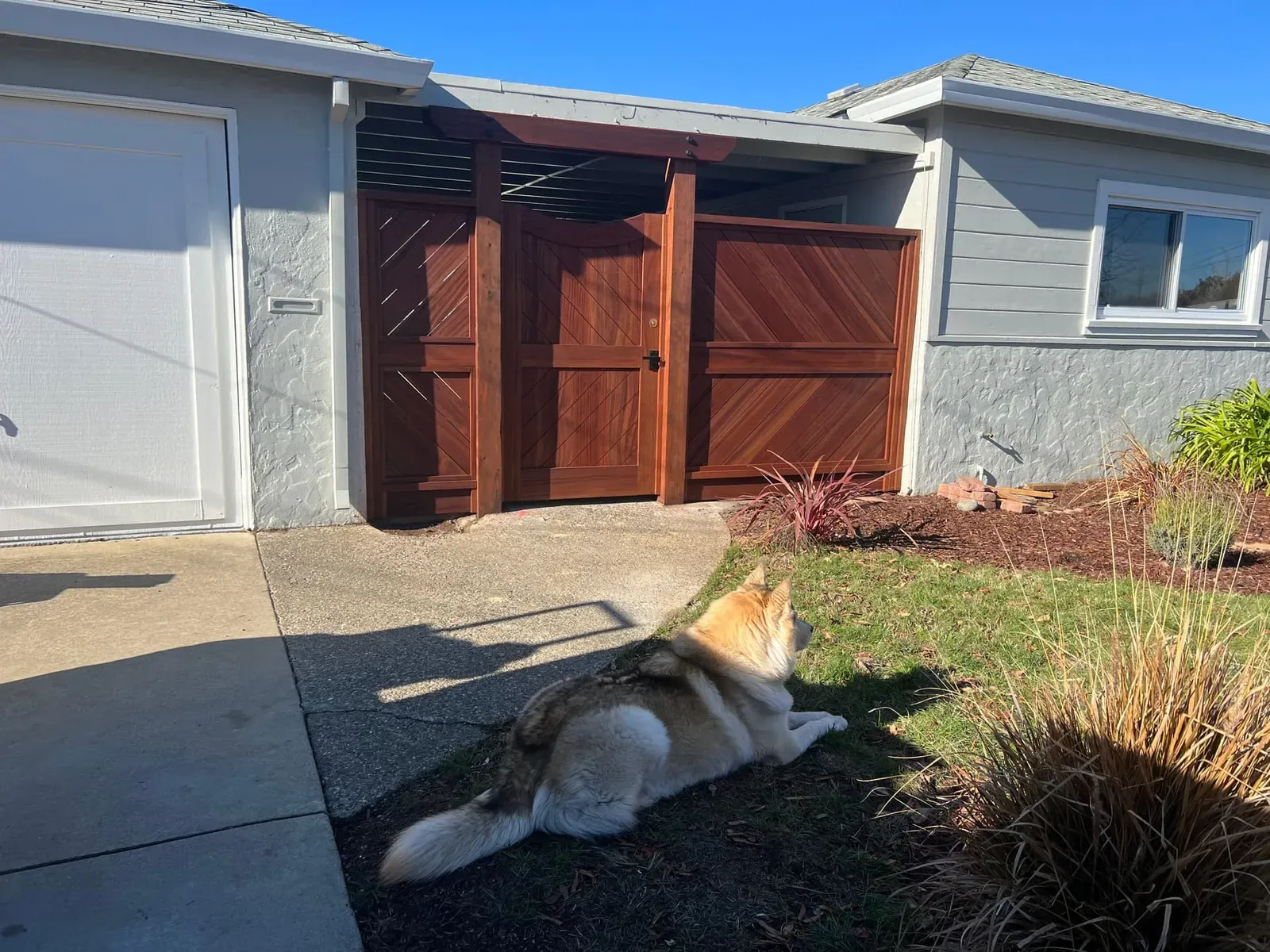
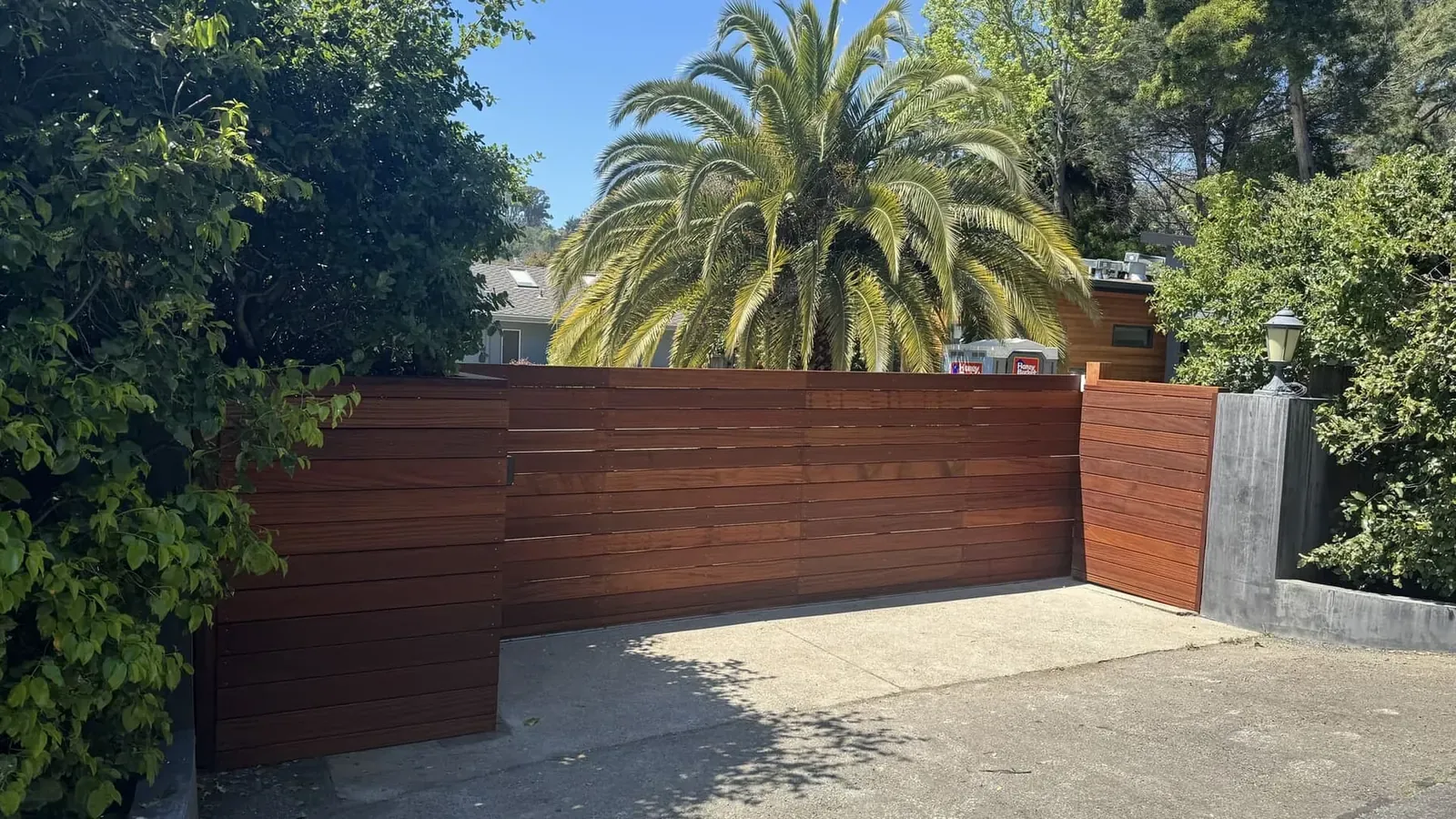
Let's design a gate that belongs to your home.
Tell us about the entrance you want to build. We respond same-day to consultations booked before 2pm, next business day after.