
The Anatomy of a True Mortise and Tenon Joint in a Custom Gate
What separates a real mortise and tenon joint from a glorified dowel — and why every Heartwood gate frame is built on this 5,000-year-old technique.
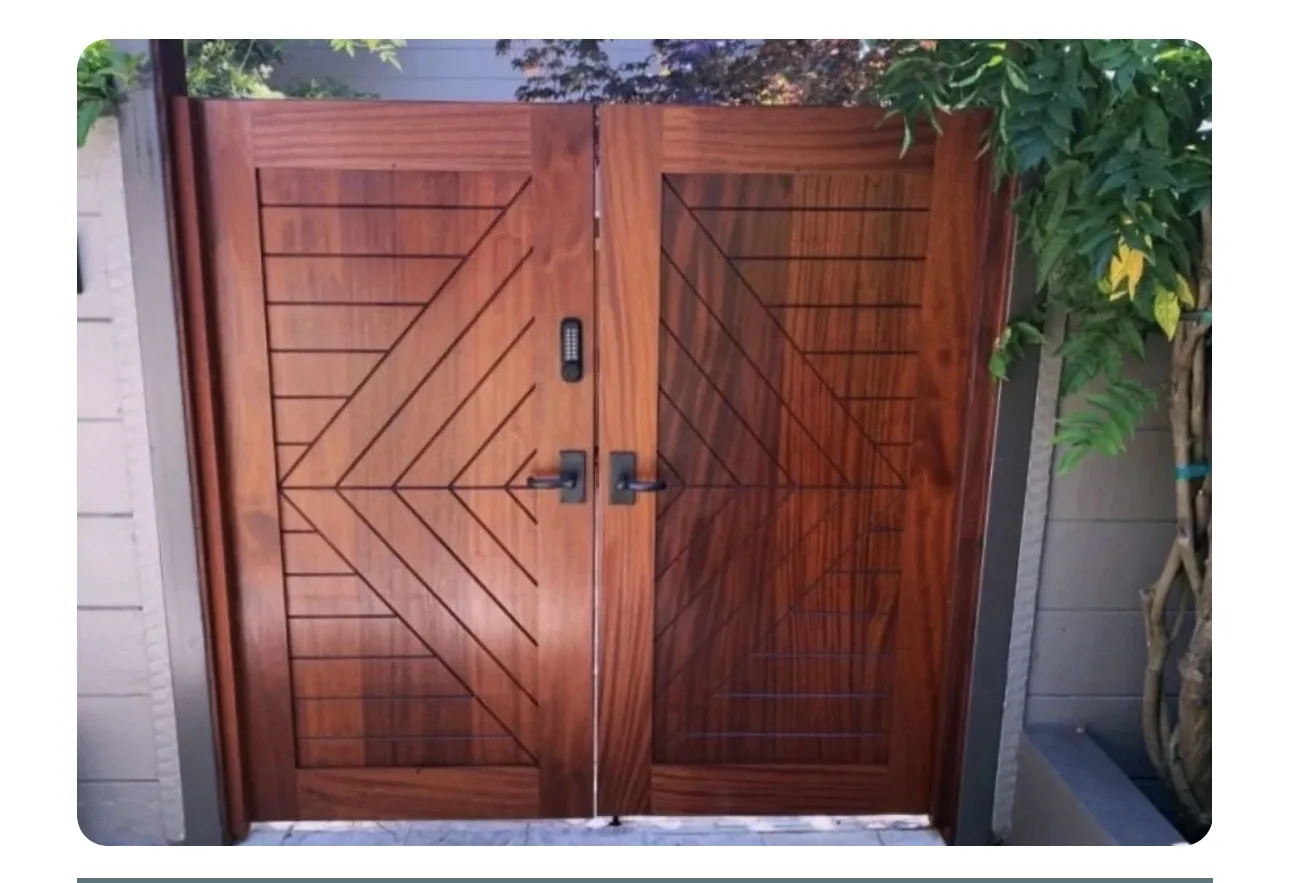
A true mortise and tenon joint is a rectangular hole (mortise) cut into one piece of wood, into which a precisely matched tongue (tenon) on a second piece is fit. In a custom gate, the joint resists racking, sagging, and seasonal movement better than any metal fastener — and is the single biggest predictor of how long the gate will last.
Key takeaways
- A true mortise and tenon joint is a rectangular hole (mortise) cut into one piece of wood, into which a precisely matched tongue (tenon) on a second piece is fit. In a custom gate, the joint resists racking, sagging, and seasonal movement better than any metal fastener — and is the single biggest predictor of how long the gate will last.
- What a mortise and tenon joint actually is: A mortise is a precisely cut rectangular cavity, usually in a vertical stile.
- Why screws and brackets fail on outdoor gates: Outdoor gates live through the worst conditions wood can experience.
- The drawbore pin: the secret that doubles the joint's life: Modern joinery often relies on long clamp time and modern glue to make a mortise and tenon work.
- Through-tenons, blind tenons, and twin tenons: Not every mortise and tenon joint is identical.
- Do all your gates use mortise and tenon joinery? Every gate built in our Concord workshop uses mortise and tenon joinery for the primary frame, with drawbore pins on gates over four feet wide. The only exception is very wide automated driveway gates, which use a welded steel sub-frame faced with floating-tenon-joined hardwood cladding.
Almost every premium gate sold in California is held together by hidden steel brackets, pocket screws, or polyurethane glue. They look the same on day one. By year ten, only one type of joint is still tight: the mortise and tenon. It is the oldest woodworking joint on Earth — found in 5,000-year-old Egyptian furniture and the timber frames of Japanese temples that have outlasted earthquakes, fires, and dynasties. When we build a hardwood gate in our Concord workshop for a client in Lafayette, Orinda, or the rolling hills of Alamo, the frame is mortise-and-tenon joined. No screws. No brackets. Just wood inside wood, drawbore-pinned and locked for life.
What a mortise and tenon joint actually is
A mortise is a precisely cut rectangular cavity, usually in a vertical stile. A tenon is a matching tongue machined onto the end of a horizontal rail. The tongue slides into the cavity. When fit correctly, the joint is so tight that the rail will hang from the stile without any glue at all — a test we run on every gate frame before final assembly.
The strength of the joint is mechanical, not chemical. Glue helps, but it's not what holds the gate together over decades. What holds it together is the long-grain contact surfaces locked inside the mortise, transferring load along the wood fibers rather than across them. A mortise and tenon joint moves with the wood as humidity changes; a steel bracket fights the wood and eventually loses.
On a typical 6-foot pedestrian gate, each corner joint has about 9 to 12 square inches of glue surface — more than enough to resist the cyclic loading the gate sees every day for the next 40 years.
Why screws and brackets fail on outdoor gates
Outdoor gates live through the worst conditions wood can experience. In Lafayette, the same gate that sits in 105°F valley sun on a July afternoon will see 38°F overnight in January, with humidity swinging from 15% to 95%. Every cycle, the wood shrinks and swells. Every cycle, the screws holding metal brackets to that wood loosen a little more.
Steel and wood expand at different rates. Steel barely moves; hardwood can grow and shrink several millimeters across a stile. Over time, the screw threads chew through the surrounding wood fibers, the brackets get loose, the corners begin to rack, and the gate starts to sag at the latch. By the time you notice it, the damage is done.
Mortise and tenon joints don't have this problem because they don't rely on fasteners holding two materials together. The wood is the fastener.
The drawbore pin: the secret that doubles the joint's life
Modern joinery often relies on long clamp time and modern glue to make a mortise and tenon work. Traditional joinery solved the problem differently: the drawbore pin. After cutting the joint, the joiner drills a small hole through the mortise cheek, then drills a matching hole through the tenon — but offset slightly toward the shoulder.
When a tapered hardwood pin is hammered through, it pulls the shoulder of the tenon tight against the stile and locks it there mechanically. The joint cannot loosen unless the pin shears, and even modest oak pins shear at loads far beyond anything a residential gate will ever experience.
Every Heartwood mortise and tenon joint on a gate over 4 feet wide gets at least one drawbore pin per corner. On large estate gates in Alamo and Danville we use two. It adds time in the shop — but adds decades to the life of the gate.
Through-tenons, blind tenons, and twin tenons
Not every mortise and tenon joint is identical. A through-tenon passes completely through the stile and is visible from the back, often wedged for additional mechanical lock. We use through-tenons on craftsman-style and Greene-and-Greene-inspired gates where the joinery is meant to be expressed as a design feature.
A blind tenon stops inside the stile and is invisible from the outside — the right choice when the gate is meant to read as a single continuous surface or when both sides will be planed flush. This is our default for contemporary gates in Walnut Creek and Berkeley.
Twin tenons split the joint into two parallel tongues with a bridge of wood between them. We use twin tenons on wide horizontal rails where a single tenon would be too tall to be reliable — common on the bottom rails of automated driveway gates that need to span 7 to 8 feet without flexing.
How we cut joinery in the workshop
Tenons are cut on a dedicated tenoning machine that produces a four-shouldered, precisely dimensioned tongue in a single pass. Mortises are cut on a hollow-chisel mortiser that drills a square hole — a process that takes about 90 seconds per joint on a stile in 8/4 Sapele.
Every joint is then hand-fit. We pare the cheeks of the tenon with a chisel until it slides into the mortise with firm hand pressure — tight enough to support its own weight, loose enough to seat fully without splitting the stile. A joint that's too tight is more dangerous than a joint that's too loose; it can split the stile when temperature and humidity change.
Before final assembly, every joint gets a dry-fit and a load test. We hang the frame from a hoist and check for any movement. Only then does the gate go into final glue-up.
We're booking design consultations 4–6 weeks out. Send us your driveway photos and we'll come back with a sketch, wood spec, and finish system within five business days.
What this means for an East Bay homeowner
A gate built with real joinery is not a cosmetic upgrade. It's the difference between a piece of millwork that will outlast your front door and a fence panel that will need replacing in eight years. In a city like Lafayette, where most properties are intended to be held for decades and resale matters, the construction matters.
We've serviced gates we built fifteen years ago for clients who have since moved twice, and the joints are still tight. We've also serviced gates we did not build, where the bracket-and-screw construction had failed inside of five seasons.
When you're commissioning a custom gate, the single most important question to ask is: how are the corners joined? If the answer involves screws, brackets, or steel plates, you're buying a different product. If you're not sure how to evaluate the answer, see our companion piece on how Heartwood builds steel sub-frames for hybrid gates: the steel sub-frame + Sapele cladding method.
When mortise and tenon is wrong
Real joinery has limits. On extremely wide automated driveway gates — anything past about 14 feet in a single leaf — the cyclic motion of the operator generates forces that can outpace what an all-wood mortise and tenon frame can handle. For those gates, we use a hybrid: a fully welded steel sub-frame that carries all the operator load, faced with a Sapele or white oak cladding that gives the gate its appearance. The cladding is itself joined with floating tenons.
Pure mortise and tenon construction also requires hardwood thick enough to host the joint — typically 8/4 stock or thicker. Light cedar or pine fence-grade lumber can't reliably hold a mortise. This is why we don't build in those materials.
The 90% of gates where mortise and tenon is the correct answer are exactly the gates most clients are commissioning: pedestrian gates, courtyard gates, garden gates, and driveway gates up to roughly 14 feet per leaf.
Working with us on a joinery-first gate
Every gate we build for a client in Lafayette, Walnut Creek, Orinda, or anywhere across the East Bay starts with the same conversation about joinery. We'll walk you through the joint type we plan to use, why it's the right one for your site and your gate's geometry, and how we'll cut and fit it. If you'd like to see the workshop, we welcome shop visits.
To start your project, request a free design consultation through our contact page or read our custom gates service overview. If you want to dig deeper into materials before booking, our guides on Sapele vs. redwood and Sapele vs. teak in Northern California are the next two we'd recommend.
A gate is one of the longest-lived purchases you'll make for your home. The joinery is what makes that true.
About joinery
For more answers, see our full FAQ.
Related articles
Let's design a gate that belongs to your home.
Tell us about the entrance you want to build. We respond same-day to consultations booked before 2pm, next business day after.