
Decorative Iron Scrollwork: Traditional Design Language for Estate Gates in St. Helena and Yountville
How hand-forged scrollwork, finials, and ornamental iron panels bring classical gate design to Wine Country estates — and where to use restraint so the gate ages gracefully.
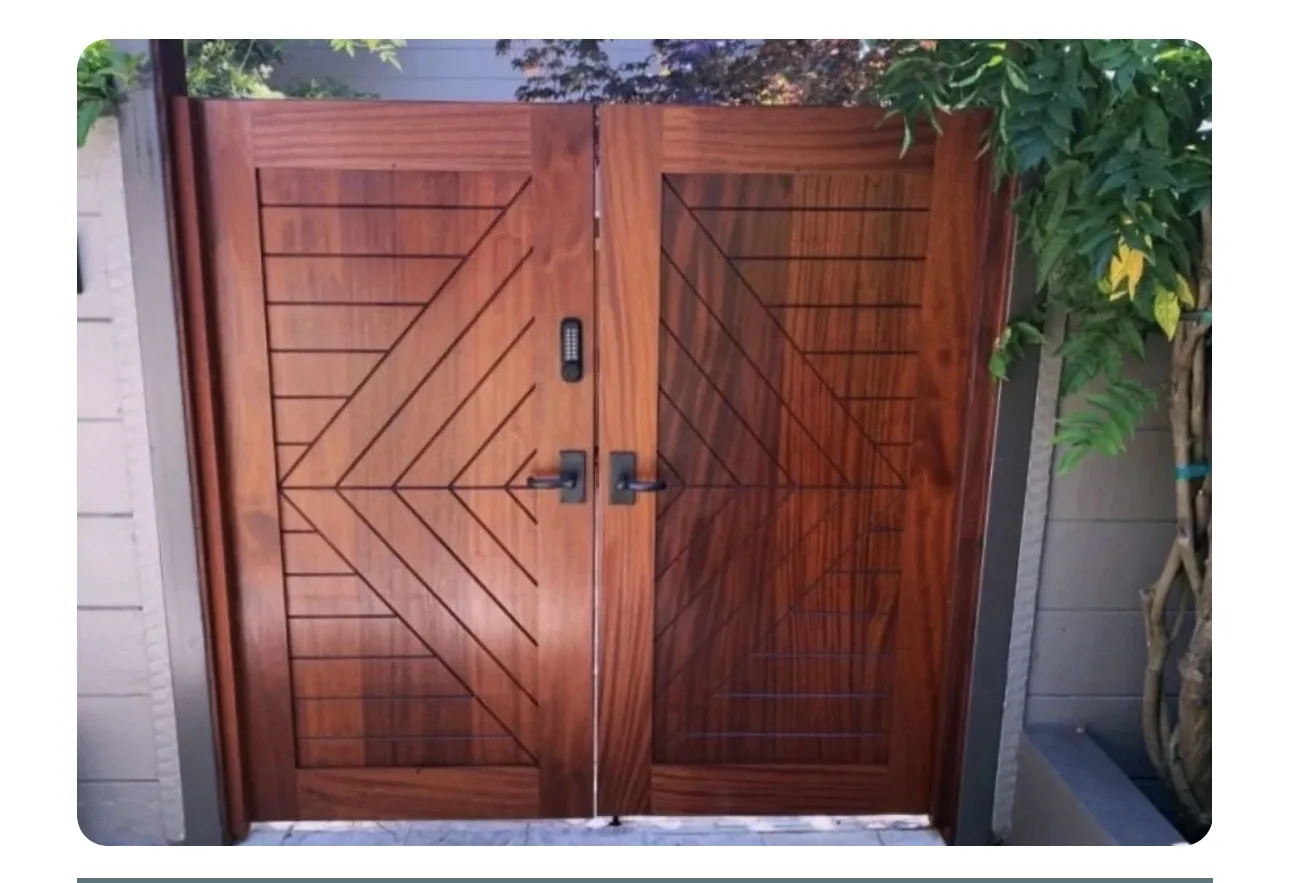
Traditional decorative iron scrollwork brings timeless presence to Wine Country estate gates. Heartwood Gates designs scrollwork in forged steel or wrought iron, paired with Sapele or white oak cladding, and sized so the ornament survives wind, vineyard dust, and temperature cycling without becoming a maintenance burden.
Key takeaways
- Traditional decorative iron scrollwork brings timeless presence to Wine Country estate gates. Heartwood Gates designs scrollwork in forged steel or wrought iron, paired with Sapele or white oak cladding, and sized so the ornament survives wind, vineyard dust, and temperature cycling without becoming a maintenance burden.
- The design language of Wine Country gates: Wine Country architecture — particularly in St.
- Scrollwork styles and their origins: The single-scroll curl is the simplest and most common element: a flat bar, typically 1/2-inch by 1-1/2-inch, forged into a tight spiral that terminates in a small ball or arrowhead finial.
- Material: forged steel vs cast iron vs wrought iron: We build scrollwork in three materials depending on the project budget and the desired finish.
- Where to use restraint: The most common mistake in traditional iron gate design is too much ornament.
- Is scrollwork only for traditional homes? No — we use simplified scrollwork on transitional and even contemporary gates, but the style works best when there is some architectural connection to classical or Mediterranean forms. On ultra-modern homes, we typically recommend horizontal slats or plain iron panels instead.
The Wine Country estate gate sits at a unique intersection of architecture and landscape. It must announce the property without competing with it. It must feel established without feeling old. And it must survive the same 25-year weather cycle as every other gate we build, which means the ornament has to be as well engineered as the structure. Traditional decorative iron scrollwork — hand-forged curls, repoussé panels, and turned finials — is the design language that achieves all three. This piece covers how we use it, where we hold back, and why a restrained iron gate often outlasts a more elaborate one.
The design language of Wine Country gates
Wine Country architecture — particularly in St. Helena, Yountville, Rutherford, and the hills above Napa — draws from a mix of Mediterranean, California ranch, and French provincial traditions. The gates that serve these estates tend to follow the same vocabulary: strong vertical posts, horizontal rails, and ornamental ironwork that provides visual interest without overwhelming the landscape.
Scrollwork is the traditional solution. A forged-steel scroll — a flat bar of steel heated in a forge, hammered into a curl, and cooled — provides shadow, texture, and a sense of craft that machined components cannot replicate. When the scroll is paired with a hardwood frame in Sapele or white oak, the contrast between warm wood and cool iron creates the classic Wine Country gate profile.
Scrollwork styles and their origins
The single-scroll curl is the simplest and most common element: a flat bar, typically 1/2-inch by 1-1/2-inch, forged into a tight spiral that terminates in a small ball or arrowhead finial. It reads as classical without being ornate, and it casts dramatic shadows in the low Napa Valley winter sun.
The S-scroll and C-scroll are more elaborate, with two or more curls connected by a reverse bend. These work best in the upper panels of a gate, above eye level, where their complexity contributes to silhouette without demanding close inspection. We use S-scrolls sparingly — typically one or two per leaf — because too many compete with the vineyard views behind them.
Repoussé panels — sheet steel hammered from the back to create raised floral or vine motifs — are the most formal option. They read as estate-grade and are appropriate for properties with formal gardens, allées, or symmetrical architecture. We reserve repoussé for the central panel of a double gate, where it becomes a focal point rather than a repeating texture.
Material: forged steel vs cast iron vs wrought iron
We build scrollwork in three materials depending on the project budget and the desired finish. Forged mild steel is the default: it takes heat and hammering beautifully, welds cleanly to gate frames, and can be powder-coated or hand-finished in oil-rubbed bronze, matte black, or antique copper.
Cast iron is less common in our work because it is brittle and does not tolerate the vibration of an automated gate. We use cast iron only for static ornamental elements — finials, rosettes, and non-structural appliqués — never for scrollwork that carries load or flexes with the gate.
Wrought iron is the traditional material for historic restorations. It is more corrosion-resistant than mild steel and was the standard for gates built before 1900. True wrought iron is expensive and difficult to source today; we reserve it for restoration projects where historical accuracy matters more than budget.
Where to use restraint
The most common mistake in traditional iron gate design is too much ornament. A gate covered in scrollwork from post to post and rail to rail looks busy from the road, traps vineyard dust and spider webs, and creates dozens of small crevices where moisture collects and corrosion starts.
Our rule: no more than 30% of the gate's face area should be iron ornament. The rest is hardwood cladding or open space. This ratio gives the scrollwork room to breathe, ensures the gate reads as wood-first from a distance, and keeps maintenance manageable. A gate with 50% iron ornament requires repainting or refinishing twice as often as one with 25%.
We also avoid scrollwork in the lower third of a gate leaf. The bottom rail is the most vulnerable to ground moisture, weed-whacker damage, and sprinkler overspray. Keeping the lower third as solid hardwood or simple steel rail protects the ornament and the gate's structural integrity.
We're booking design consultations 4–6 weeks out. Send us your driveway photos and we'll come back with a sketch, wood spec, and finish system within five business days.
Finish and maintenance in vineyard dust
Napa and Sonoma valley floors accumulate a fine dust during the growing season — pulverized volcanic soil that settles on every horizontal surface. On an oil-rubbed bronze finish, that dust is invisible. On a glossy black powder coat, it shows within a week.
We specify matte or satin finishes for all Wine Country ironwork. The reduced reflectivity hides dust, reduces glare in the strong valley sun, and ages more gracefully as the finish naturally patinates. For clients who want a living finish, we offer hand-applied wax over raw steel, which rusts to a warm brown and can be renewed annually in a single afternoon.
The hardwood cladding gets the same premium oil-finish schedule (typically Penofin Verde, Armstrong Clark, or Cabot Australian Timber Oil chosen per project) as our all-wood gates: initial four-coat application, wipe-on top coat at year three, full strip-and-recoat at year eight. The iron scrollwork gets a visual inspection every two years and touch-up of any chips or scratches that expose raw steel.
Integration with automated operators
Traditional scrollwork gates are often assumed to be manual, but most of our Wine Country estate installations include automation. The key is designing the scrollwork so it does not interfere with the operator arm's sweep path or the safety sensor beams. We model the operator geometry in CAD before cutting any steel, ensuring that every curl and finial clears the actuator by at least 3 inches at full extension.
For double swing gates, the scrollwork in the center meeting stile must also clear the latch mechanism and any electric strike. We typically reserve the center 6 inches of each meeting stile for plain hardwood or a simple steel flat bar, with the ornament beginning above and below that zone.
Designing a scrollwork gate with Heartwood
Every traditional iron gate we design for St. Helena, Yountville, or the surrounding Wine Country starts with a site visit and a conversation about architecture. We look at the house style, the landscape character, the driveway geometry, and the client's tolerance for maintenance. Then we sketch scrollwork options ranging from minimal to formal, and the client chooses the direction.
From sketch, we move to a full-scale CAD rendering with the scrollwork drawn in detail, the hardwood species selected, and the operator integrated. The client sees the gate before we cut any material. Production is typically 10 to 14 weeks.
To start a project, visit our custom gates page or request a design consultation. For more on iron hardware specifically, see our piece on hand-forged iron hardware.
About design
For more answers, see our full FAQ.
Related articles
Let's design a gate that belongs to your home.
Tell us about the entrance you want to build. We respond same-day to consultations booked before 2pm, next business day after.