
Modern and Contemporary Driveway Gates
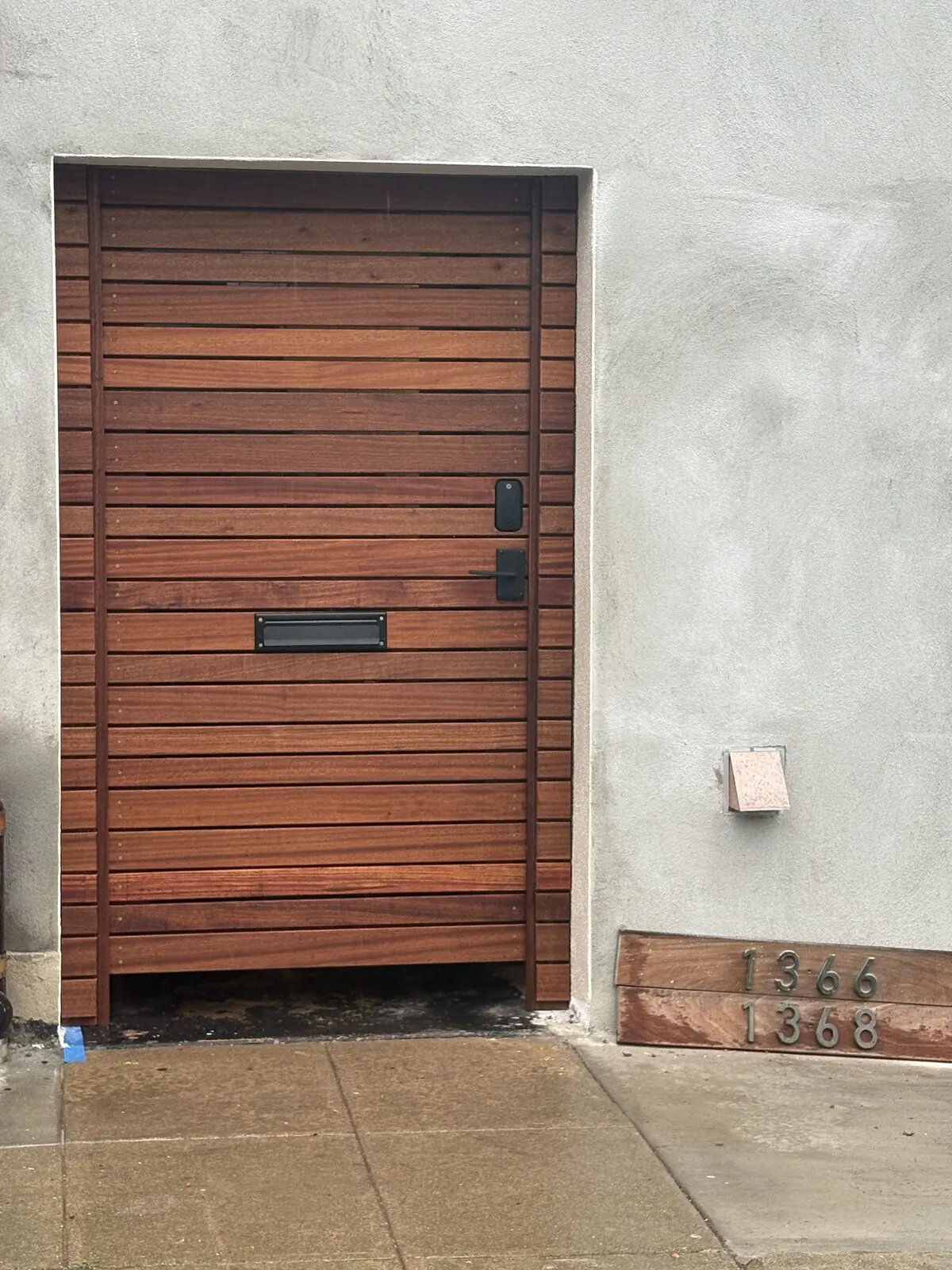
Modern driveway gates depend on proportion, material and carefully resolved connections. Horizontal slats, board-on-board layouts and flush faces are drawn around the entrance and the way it is used.
What makes a driveway gate modern or contemporary?
A modern driveway gate uses deliberate proportions and a restrained arrangement of boards, frame and hardware. Horizontal slats, board-on-board layouts and clean flush faces each give a different balance of openness and privacy.
A horizontal slat gate draws the eye along the boundary. Board-on-board construction layers the face for more screening, while a flush face keeps the board pattern quiet. The chosen layout must work with the posts, adjacent fencing and the architecture rather than rely on decoration.
How are board width and spacing chosen?
Board width and spacing are chosen around privacy, views and wind exposure at the entrance. A more open face and a more enclosed face place different demands on the structure.
We consider what should be seen from the street and from inside the property. Wider boards read differently from a fine horizontal rhythm; gaps change both the view through the gate and the way the face meets moving air. Frame design and hardware are reviewed with that layout, not after it.
Why combine hardwood with a steel frame?
A wood-and-steel hybrid frame separates the visible timber layout from the structure carrying it. Connections are detailed to accommodate the hardwood rather than restrain it indiscriminately.
Sapele mahogany brings a distinct grain and works with mortise-and-tenon joinery in hardwood construction or carefully detailed infill on steel. Tongue-and-groove boards suit a more continuous face where the design calls for it. White oak and other species are considered for their character and exposure; compare them in our wood-types guide.
Which opening configurations are available?
Modern designs can be developed as swing, sliding or cantilever, bi-parting, and bi-fold gates. Site clearance and the travel of the leaves determine which configuration suits the entrance.
A swing gate needs room for its arc. A sliding arrangement needs side run-back space, while a bi-fold layout changes how the leaves fold and clear the drive. A cantilever sliding gate avoids a track across the driveway where ground conditions make one problematic.
How are finishes selected for a modern wood gate?
The finish is selected for the timber, exposure and the desired appearance of the grain. Hardwood samples and the metal finish are reviewed together during design.
A clear-looking timber face, a pigmented finish and a powder-coated steel frame each interact differently with the surrounding architecture. We resolve visible fixings, board edges and frame transitions with those samples. Finish care is discussed as part of the material decision, not treated as separate from it.
What does a modern driveway gate cost?
Most projects $6,500–$30,000+ installed. Automation is quoted per site.
Single swing gates run $6,500–$20,000+; double swing gates run $8,500–$30,000+. Sliding gates, including cantilever, run $22,000–$85,000+; bi-parting gates run $28,000–$95,000+. A bi-fold design is quoted to its scope without an assumed range.
Read the driveway gate cost guide for cost drivers, and browse the gallery for built work and material details.
What else should you know?
01Can a horizontal slat gate provide privacy?
02Can a modern gate use Sapele mahogany and steel?
03Is Sapele the only wood available?
04Can a contemporary driveway gate be automated?
05Are modern gates limited to sliding configurations?
Where can you explore the next details?
These pages cover related configurations and the next conversation about your entrance.
Ready to discuss your entrance?
Book a free design consultation. We will review the site, construction and opening configuration before defining your project scope.